
Today Quetta Chicken Rate
Updated 23rd August 2026 · Source: Quetta Market Committee
Farm Gate Live Rate
Rs: 237–264 /Kg
Broiler Live wholesale Rate
Rs: 267–298 /Kg
Broiler Meat Retail Rate
Rs: 430–480 /Kg
Broiler Live Retail Rate
Rs: 301–336 / Kg
The latest Quetta chicken rate has been updated for 23rd August 2026 using official market data. Today’s wholesale live chicken rate stands at Rs: 267–298/kg, with farm gate prices at Rs: 237–264/Kg. Live retail chicken is selling for Rs: 301–336, while broiler meat retail is Rs: 430–480/Kg. Explore the trend chart and historical prices further down this page.
PRICE TREND
Quetta Chicken Rate Summary & Trend
The summary below highlights the highest and lowest broiler prices recorded during the selected period, along with the average market rate. This snapshot makes it easier to understand how prices have moved instead of looking at individual daily figures.
Highest Retail Rate
Rs: 430–480 on 23 Aug
Lowest Retail Rate
Rs: 400–450 on 19 Aug
Average Retail Rate
Rs: 411–461 So far this month
Last month Breakdown
Quetta Last Month Broiler Chicken Rates
The table below shows how chicken prices changed throughout the past month in Quetta. Reviewing daily market records helps identify periods of stability, sudden increases, and price corrections, giving buyers and businesses a clearer picture of recent market activity.
| Date | Farm Gate Live (₨) | Wholesale Live (₨) | Retail Live (₨) | Meat Retail (₨) |
|---|---|---|---|---|
| 23 Aug 2026 | ₨237–₨264 | ₨267–₨298 | ₨301–₨336 | ₨430–₨480 |
| 21 Aug 2026 | ₨237–₨264 | ₨267–₨298 | ₨301–₨336 | ₨430–₨480 |
| 19 Aug 2026 | ₨220–₨248 | ₨248–₨279 | ₨280–₨315 | ₨400–₨450 |
| 18 Aug 2026 | ₨220–₨248 | ₨248–₨279 | ₨280–₨315 | ₨400–₨450 |
| 17 Aug 2026 | ₨220–₨248 | ₨248–₨279 | ₨280–₨315 | ₨400–₨450 |
| 15 Aug 2026 | ₨220–₨248 | ₨248–₨279 | ₨280–₨315 | ₨400–₨450 |
| 12 Aug 2026 | ₨220–₨248 | ₨248–₨279 | ₨280–₨315 | ₨400–₨450 |
| 11 Aug 2026 | ₨220–₨248 | ₨248–₨279 | ₨280–₨315 | ₨400–₨450 |
| 09 Aug 2026 | ₨220–₨248 | ₨248–₨279 | ₨280–₨315 | ₨400–₨450 |
| 08 Aug 2026 | ₨226–₨248 | ₨254–₨279 | ₨287–₨315 | ₨410–₨450 |
| 07 Aug 2026 | ₨226–₨248 | ₨254–₨279 | ₨287–₨315 | ₨410–₨450 |
| 06 Aug 2026 | ₨226–₨248 | ₨254–₨279 | ₨287–₨315 | ₨410–₨450 |
| 05 Aug 2026 | ₨226–₨248 | ₨254–₨279 | ₨287–₨315 | ₨410–₨450 |
| 04 Aug 2026 | ₨231–₨264 | ₨260–₨298 | ₨294–₨336 | ₨420–₨480 |
| 03 Aug 2026 | ₨231–₨264 | ₨260–₨298 | ₨294–₨336 | ₨420–₨480 |
| 02 Aug 2026 | ₨231–₨264 | ₨260–₨298 | ₨294–₨336 | ₨420–₨480 |
| 01 Aug 2026 | ₨231–₨264 | ₨260–₨298 | ₨294–₨336 | ₨420–₨480 |
| 31 Jul 2026 | ₨231–₨264 | ₨260–₨298 | ₨294–₨336 | ₨420–₨480 |
| 30 Jul 2026 | ₨231–₨264 | ₨260–₨298 | ₨294–₨336 | ₨420–₨480 |
| 29 Jul 2026 | ₨220–₨253 | ₨248–₨285 | ₨280–₨322 | ₨400–₨460 |
| 25 Jul 2026 | — | — | — | ₨505.00 |
| 23 Jul 2026 | — | — | — | ₨508.00 |
| 22 Jul 2026 | — | — | — | ₨524.00 |
Why Quetta Is the Main Poultry Market of Balochistan?
Quetta stands as Balochistan’s largest commercial city, and its poultry trade reflects that position. As the province’s main urban center, Quetta handles far more chicken trade than any other city in the region.
Surrounding districts across Balochistan often depend on Quetta for their poultry supply. Smaller towns simply don’t have the wholesale infrastructure to handle large volumes on their own, so traders and shopkeepers from outside the city regularly source their stock through Quetta’s markets.
Urban food demand in Quetta keeps growing alongside its population. Households cook chicken regularly, restaurants serve a steady stream of customers, and traders move supply onward to nearby areas. This combination makes Quetta the backbone of Balochistan’s poultry economy, rather than just one city among many.
How Geography Influences Chicken Supply in Quetta?
Quetta’s location shapes its poultry market in ways that don’t apply to most other major Pakistani cities.
Poultry Supply from Other Regions
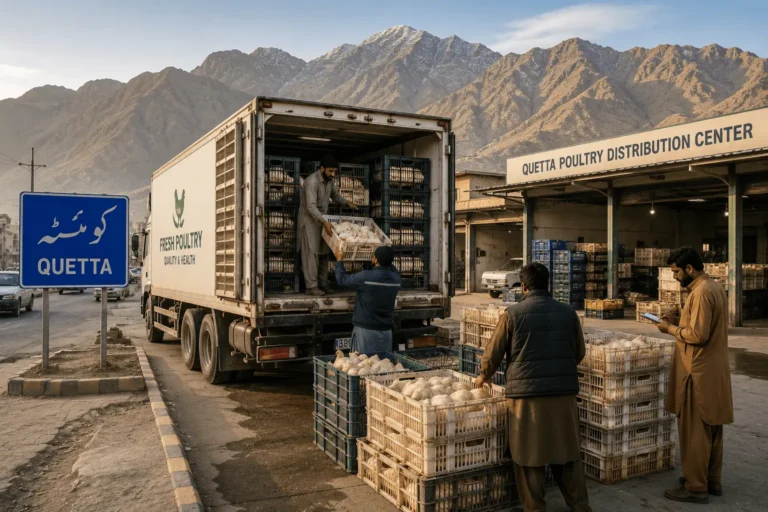
Balochistan does not have the same scale of commercial poultry farming found in Punjab and Sindh. Because of this, most broiler chickens sold in Quetta arrive from poultry producing regions outside the province.
Traders coordinate closely with suppliers in these regions to keep a steady flow of birds moving toward Quetta. Since local production is limited, this outside supply forms the backbone of what reaches the city’s wholesale markets each day.
Transportation Across Long Distances
Getting chicken into Quetta involves longer travel distances compared to cities located closer to major poultry farming areas. The routes into Quetta also pass through mountainous terrain, which can slow deliveries during poor weather or difficult road conditions.
These transportation challenges add real cost and complexity to the supply chain. A delay caused by weather or road conditions can affect how much chicken reaches Quetta’s markets on a given day, which is why this stage of the journey matters so much for the city’s overall poultry supply.
Where Fresh Chicken Is Sold in Quetta
Once chicken reaches Quetta, it moves through several types of businesses before reaching a household or restaurant kitchen.
- Traditional meat shops remain the most common place for households to buy fresh chicken, especially in older parts of the city where customers often deal with the same shopkeeper for years.
- Wholesale poultry markets supply large volumes to retailers, restaurants, and other bulk buyers across Quetta.
- Supermarkets offer packaged, ready to cook chicken for residents who prefer a more modern shopping experience alongside their groceries.
- Grocery stores in many neighborhoods now stock fresh or frozen chicken alongside everyday household items.
- Restaurants across the city rely on daily deliveries to keep their kitchens stocked for both regular customers and larger orders.
- Hotels serving local and visiting guests depend on a consistent chicken supply to run their kitchens smoothly.
- Fast food outlets, which have grown steadily in Quetta over recent years, depend heavily on chicken for a large share of their menu items.
Together, these outlets cover the full range of how Quetta’s residents and businesses access fresh chicken, from a quick household purchase to a large restaurant order.
Factors That Can Influence Chicken Prices in Quetta
Several factors can affect chicken prices in Quetta, and many of them connect directly to the city’s unique supply situation.
Because Quetta relies so heavily on chicken arriving from other regions, its market often feels supply changes a little later, and sometimes more sharply, than cities located closer to major poultry farming areas.
Safe Storage Tips After Buying Fresh Chicken
Since chicken in Quetta often travels a longer distance before reaching the shop, proper storage at home becomes especially important.
- Refrigerate chicken promptly: Get fresh chicken into the fridge as soon as possible after buying it, rather than leaving it at room temperature.
- Use clean containers: Store chicken in a sealed, clean container to prevent juices from spreading to other food items.
- Separate raw chicken from other foods.: Keep raw chicken away from vegetables, fruits, and cooked food, both in the fridge and while preparing meals.
- Follow recommended storage times: Fresh chicken is best used within one to two days if refrigerated, so plan meals accordingly.
- Freeze chicken for longer storage: If it won’t be cooked within a couple of days, freezing helps maintain quality and safety for a longer period.
- Cook chicken thoroughly: Make sure chicken reaches a safe internal temperature and shows no pink color before serving.
- Maintain kitchen hygiene: Wash hands, cutting boards, and utensils thoroughly after handling raw chicken to avoid cross contamination.
Following these simple steps helps households in Quetta get the most out of every purchase, while keeping meals safe from farm gate all the way to the dinner table.
Explore Chicken Rates by City
Chicken prices in Quetta do not always move at the same pace as other Pakistani cities. Transportation distances, supply arriving from poultry producing regions, and local demand across Balochistan can all influence market conditions. Comparing Quetta with other cities helps reveal how regional factors affect broiler prices.
QUESTIONS