
Today Chicken Rate in Rawalpindi
Updated 23rd August 2026 · Source: Rawalpindi Market Committee
Farm Gate Live Rate
Rs: 305.08 /Kg
Broiler Live wholesale Rate
Rs: 341.90 /Kg
Broiler Meat Retail Rate
Rs: 526.00 /Kg
Broiler Live Retail Rate
Rs: 378.72 / Kg
As of 23rd August 2026: Today Chicken Rate in Rawalpindi is Rs: 341.90 per Kg. The farm gate price is Rs: 305.08/Kg, while the Broiler live retail rate stands at Rs: 378.72 and Broiler dressed retail chicken is priced at Rs: 526.00/Kg. Check the full last-30-day breakdown and trend chart below.
Rawalpindi Market Overview
Rawalpindi Chicken Rate Summary & Trend
The Rawalpindi chicken rate summary below provides a quick overview of recent market activity. Instead of checking individual daily prices, you can instantly see the highest, lowest, and average broiler rates for the selected period, making it easier to understand how the local market has performed over time.
Highest Retail Rate
Rs: 394.56 on 21 Aug
Lowest Retail Rate
Rs: 347.76 on 9 Aug
Average Retail Rate
Rs: 366.06 So far this month
Last Month Full Breakdown
Rawalpindi Last Month Broiler Chicken Rates
Every price in the table below represents a daily market update for Rawalpindi. Looking at this timeline helps you spot short term price movements, compare different trading days, and understand how the local broiler market has changed throughout the past month.
| Date | Farm Gate Live (₨) | Wholesale Live (₨) | Retail Live (₨) | Meat Retail (₨) |
|---|---|---|---|---|
| 23 Aug 2026 | ₨305.08 | ₨341.90 | ₨378.72 | ₨526.00 |
| 21 Aug 2026 | ₨317.84 | ₨356.20 | ₨394.56 | ₨548.00 |
| 19 Aug 2026 | ₨305.08 | ₨341.90 | ₨378.72 | ₨526.00 |
| 18 Aug 2026 | ₨301.02 | ₨337.35 | ₨373.68 | ₨519.00 |
| 17 Aug 2026 | ₨305.08 | ₨341.90 | ₨378.72 | ₨526.00 |
| 15 Aug 2026 | ₨292.90 | ₨328.25 | ₨363.60 | ₨505.00 |
| 12 Aug 2026 | ₨305.08 | ₨341.90 | ₨378.72 | ₨526.00 |
| 11 Aug 2026 | ₨301.02 | ₨337.35 | ₨373.68 | ₨519.00 |
| 09 Aug 2026 | ₨280.14 | ₨313.95 | ₨347.76 | ₨483.00 |
| 08 Aug 2026 | ₨280.14 | ₨313.95 | ₨347.76 | ₨483.00 |
| 07 Aug 2026 | ₨292.90 | ₨328.25 | ₨363.60 | ₨505.00 |
| 06 Aug 2026 | ₨292.90 | ₨328.25 | ₨363.60 | ₨505.00 |
| 05 Aug 2026 | ₨284.20 | ₨318.50 | ₨352.80 | ₨490.00 |
| 04 Aug 2026 | ₨280.14 | ₨313.95 | ₨347.76 | ₨483.00 |
| 03 Aug 2026 | ₨288.26 | ₨323.05 | ₨357.84 | ₨497.00 |
| 02 Aug 2026 | ₨292.90 | ₨328.25 | ₨363.60 | ₨505.00 |
| 01 Aug 2026 | ₨288.26 | ₨323.05 | ₨357.84 | ₨497.00 |
| 31 Jul 2026 | ₨284.20 | ₨318.50 | ₨352.80 | ₨490.00 |
| 30 Jul 2026 | ₨263.32 | ₨295.10 | ₨326.88 | ₨454.00 |
| 29 Jul 2026 | ₨271.44 | ₨304.20 | ₨336.96 | ₨468.00 |
| 25 Jul 2026 | ₨340.00 | ₨370.00 | ₨385.00 | ₨479.99 |
| 23 Jul 2026 | ₨330.00 | ₨339.00 | ₨345.00 | ₨520.00 |
| 22 Jul 2026 | ₨320.00 | ₨333.00 | ₨348.00 | ₨524.00 |
Rawalpindi’s Role in the Twin City Poultry Market
Rawalpindi is one of Pakistan’s busiest commercial cities, and its close connection with Islamabad shapes much of its poultry trade. Together, the twin cities form one of the country’s largest urban markets, and chicken demand across both sides stays high all year.
Rawalpindi’s own commercial base is what sets it apart. Long standing markets, dense residential neighborhoods, and a constant flow of business activity mean chicken moves through the city in large volumes every single day. Islamabad may share the same metropolitan area, but Rawalpindi carries much of the retail and wholesale poultry trade that supports both cities together.
Daily poultry consumption here comes from every direction. Families cook chicken at home, restaurants keep their kitchens running through busy service hours, and shops restock constantly to meet steady customer demand. This mix of residential and commercial activity is what keeps Rawalpindi’s chicken market as strong as it is.
How Fresh Chicken Reaches Homes and Businesses in Rawalpindi?
Once chicken arrives in the city, a clear system takes over to get it into homes, restaurants, and shops.
Wholesale Markets Supporting Local Supply
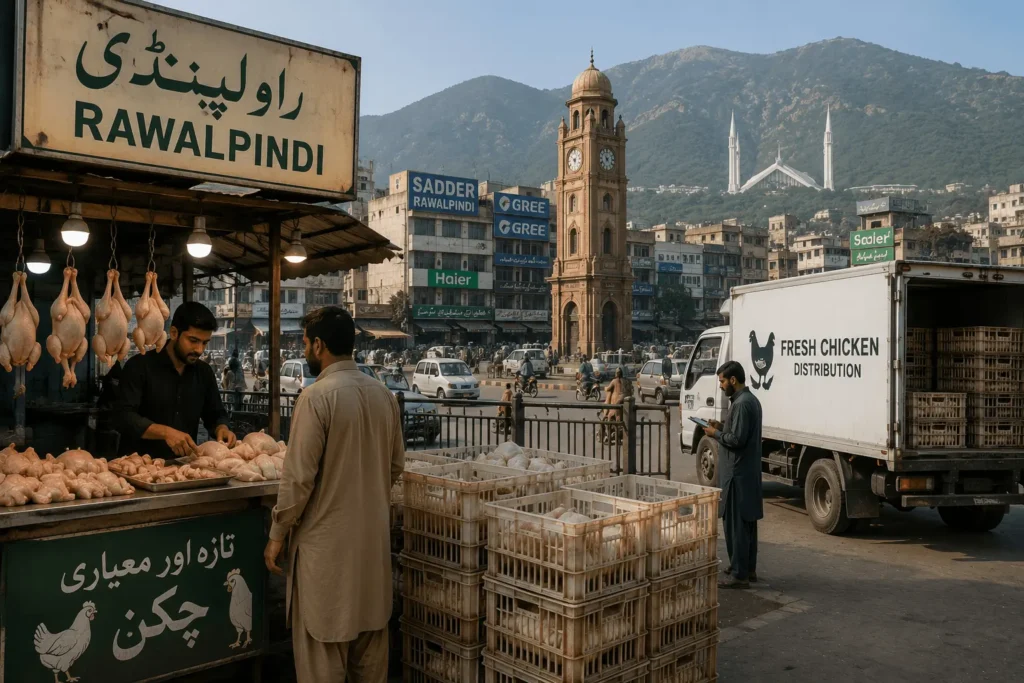
Wholesale traders play a central part in keeping Rawalpindi’s poultry supply consistent. These traders coordinate daily arrivals of broiler chicken, working to match supply with the steady demand coming from retailers across the city.
Because Rawalpindi sits within Punjab’s wider poultry trade network, wholesalers here generally maintain a reliable flow of stock, even during busier periods when demand climbs across the twin cities.
Retail Shops, Supermarkets, and Food Businesses
From the wholesale markets, chicken moves quickly into the hands of retailers who serve everyday consumers. This includes local meat shops, supermarkets, and grocery stores spread across Rawalpindi’s neighborhoods.
Restaurants, hotels, and catering businesses also draw from this same supply, often placing larger daily orders to keep up with customer volume. Food delivery kitchens, which have grown steadily across the city, depend on the same steady availability to fulfill orders throughout the day.
Because so many types of buyers are pulling from the same supply chain, Rawalpindi’s retail chicken market stays active from early morning through the evening.
Why Chicken Demand Remains High in Rawalpindi?
Everyday life in Rawalpindi keeps chicken consumption strong, driven by a wide mix of residents and businesses.
- Residential communities. Dense neighborhoods across the city mean thousands of households buying chicken regularly for home cooking.
- Office workers. With many people commuting between Rawalpindi and Islamabad for work, quick meals and takeout options built around chicken stay popular.
- Students. Educational institutions across the city bring in a steady population that regularly eats out or orders food, much of it chicken based.
- Restaurants. Rawalpindi’s restaurant scene, from small local eateries to larger dining spots, relies heavily on chicken across its menus.
- Fast food outlets. Quick service chains have expanded across the city, and chicken remains their most in demand item.
- Hotels. Guests staying in Rawalpindi, whether for business or travel between the twin cities, add to steady hotel kitchen demand.
- Family dining. Weekend outings and family meals often center around chicken dishes at local restaurants.
- Home cooking. Despite the growth of restaurants and delivery, chicken remains a kitchen staple for most Rawalpindi households.
This combination of residential and commercial demand means chicken consumption in Rawalpindi rarely slows down, even outside of peak seasons.
What Can Influence Chicken Prices in Rawalpindi?
A number of practical factors shape how chicken prices move in Rawalpindi from one day to the next.
Understanding these factors helps explain why the Rawalpindi chicken rate can shift even without any single dramatic cause behind it.
Why Checking Daily Chicken Rates Helps Smart Buyers?
Staying informed about the daily Rawalpindi chicken rate gives both households and businesses a real advantage.
For households, knowing today’s rate makes it easier to plan grocery budgets, especially when buying in bulk for a family gathering or event. Comparing prices across a few shops before a larger purchase can also help buyers avoid overpaying during busy periods.
Restaurants and food businesses benefit just as much. Watching daily prices helps them manage food costs more accurately, rather than reacting after expenses have already increased. Catering businesses planning weddings or large events rely on this same information to quote prices confidently and avoid last minute surprises.
Bulk purchasers, from hotels to grocery stores, use daily rate awareness to time their orders more effectively. Overall, checking the Rawalpindi chicken rate regularly turns a routine purchase into a more informed decision, whether that decision involves a single meal or a large weekly order.
Browse Chicken Rates by City
Rawalpindi shares a closely connected poultry market with Islamabad and several nearby cities. Comparing the Rawalpindi chicken rate with surrounding markets helps reveal regional pricing patterns and shows how local demand, daily trading activity, and market conditions can influence broiler prices from one city to another.
QUESTIONS