
Today Chicken Rate in Peshawar
Updated 23rd August 2026 · Source: Peshawar Market Committee
Broiler Live Retail Rate
Rs: 405.00 / Kg
Broiler Live wholesale Rate
Rs: 390.00 /Kg
Broiler Meat Retail Rate
Rs: 477.90 /Kg
Farm Gate Live Rate
Rs: 285.00 /Kg
The latest Peshawar chicken rate has been updated for 23rd August 2026 using official market data. Today’s wholesale live chicken rate stands at Rs: 390.00/kg, with farm gate prices at Rs: 285.00/Kg. Live retail chicken is selling for Rs: 405.00, while broiler meat retail is Rs: 477.90/Kg. Explore the trend chart and historical prices further down this page.
PRICE TREND
Peshawar Broiler Chicken Rate Summary & Trend
Follow the latest Peshawar chicken rate through the trend chart below. It highlights the highest, lowest, and average broiler chicken prices over the selected period, helping you understand how the local poultry market has moved in Khyber Pakhtunkhwa’s largest commercial city.
Highest Retail Rate
Rs: 405.00 on 23 Aug
Lowest Retail Rate
Rs: 360.00 on 4 Aug
Average Retail Rate
Rs: 379.39 So far this month
Last Month Breakdown
Peshawar Last Month Broiler Chicken Rates
View the daily Peshawar chicken rate from the last month, including farm gate, wholesale live, live retail, and broiler meat retail prices. This historical data helps buyers, traders, restaurants, and households compare previous rates and identify recent market trends.
| Date | Farm Gate Live (₨) | Wholesale Live (₨) | Retail Live (₨) | Meat Retail (₨) |
|---|---|---|---|---|
| 23 Aug 2026 | ₨285.00 | ₨390.00 | ₨405.00 | ₨477.90 |
| 21 Aug 2026 | ₨285.00 | ₨390.00 | ₨405.00 | ₨477.90 |
| 19 Aug 2026 | ₨295.00 | ₨375.00 | ₨390.00 | ₨460.20 |
| 18 Aug 2026 | ₨295.00 | ₨370.00 | ₨385.00 | ₨454.30 |
| 17 Aug 2026 | ₨295.00 | ₨370.00 | ₨384.92 | ₨454.21 |
| 15 Aug 2026 | ₨295.00 | ₨370.00 | ₨384.92 | ₨454.21 |
| 12 Aug 2026 | ₨295.00 | ₨370.00 | ₨384.92 | ₨454.21 |
| 11 Aug 2026 | ₨295.00 | ₨370.00 | ₨384.92 | ₨454.21 |
| 09 Aug 2026 | ₨265.00 | ₨360.00 | ₨375.00 | ₨442.50 |
| 08 Aug 2026 | ₨265.00 | ₨360.00 | ₨375.00 | ₨442.50 |
| 07 Aug 2026 | ₨265.00 | ₨360.00 | ₨375.00 | ₨442.50 |
| 06 Aug 2026 | ₨265.00 | ₨360.00 | ₨375.00 | ₨442.50 |
| 05 Aug 2026 | ₨265.00 | ₨350.00 | ₨365.00 | ₨430.70 |
| 04 Aug 2026 | ₨265.00 | ₨345.00 | ₨360.00 | ₨424.80 |
| 03 Aug 2026 | ₨265.00 | ₨355.00 | ₨370.00 | ₨436.60 |
| 02 Aug 2026 | ₨265.00 | ₨350.00 | ₨365.00 | ₨430.70 |
| 01 Aug 2026 | ₨265.00 | ₨350.00 | ₨365.00 | ₨430.70 |
| 31 Jul 2026 | ₨265.00 | ₨350.00 | ₨365.00 | ₨430.70 |
| 30 Jul 2026 | ₨280.00 | ₨325.00 | ₨340.00 | ₨401.20 |
| 29 Jul 2026 | ₨280.00 | ₨335.00 | ₨350.00 | ₨413.00 |
| 25 Jul 2026 | ₨340.00 | ₨380.00 | ₨395.00 | ₨500.00 |
| 23 Jul 2026 | ₨310.00 | ₨325.00 | ₨345.00 | ₨502.00 |
| 22 Jul 2026 | ₨310.00 | ₨324.00 | ₨338.00 | ₨514.00 |
All Peshawar Chicken Rates are sourced from Khyber Pakhtunkhwa commodity portal.
Peshawar’s Importance in Khyber Pakhtunkhwa’s Poultry Market
Peshawar sits at the center of Khyber Pakhtunkhwa’s economy, and its poultry trade reflects that role. As the province’s main commercial city, Peshawar handles far more chicken trade than any other city in the region.
Districts across Khyber Pakhtunkhwa, including areas like Mardan, Charsadda, and Nowshera, often connect back to Peshawar for wholesale poultry supply. Peshawar’s markets offer larger trading volumes and steadier availability, which makes the city a natural hub for the wider province rather than just a local market on its own.
Daily poultry demand in Peshawar comes from a mix of sources. Households buy for everyday cooking, restaurants serve a constant stream of customers, and traders supply smaller towns further out. As Peshawar’s urban population keeps growing, this daily demand keeps expanding right along with it.
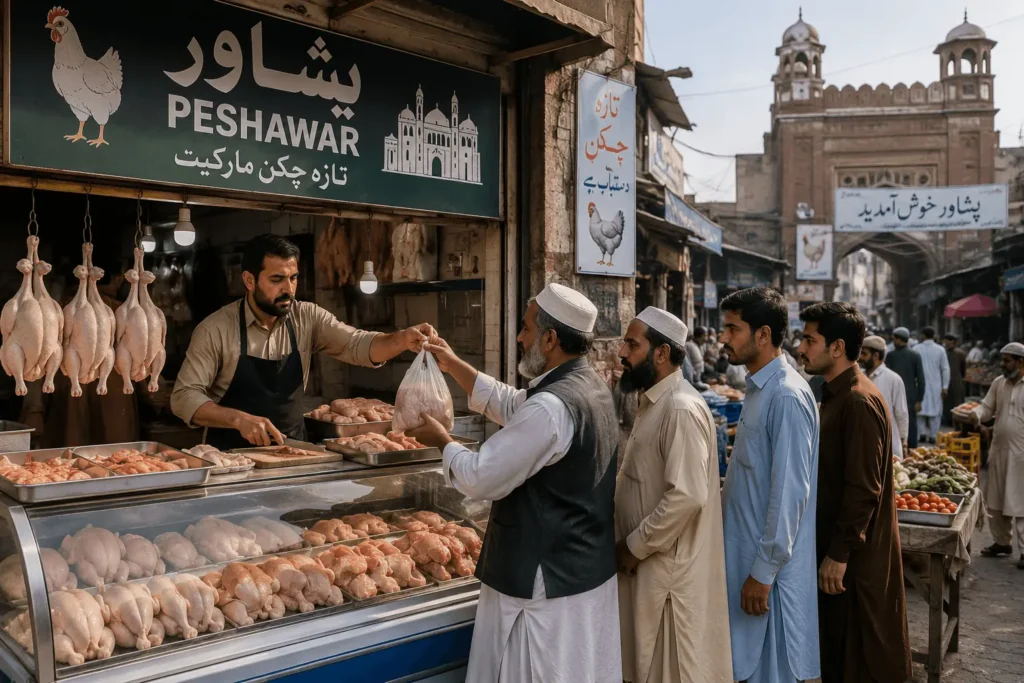
How Fresh Chicken Is Supplied Across Peshawar
Chicken reaching Peshawar’s shops and kitchens moves through a fairly direct chain, starting well before it ever reaches a customer.
Poultry Farms and Wholesale Supply
Commercial poultry farms operating in and around Peshawar, along with suppliers from nearby districts, raise broiler chickens for the local market. Once birds reach the right weight, they move to Peshawar’s wholesale poultry markets, where traders handle large volumes each morning.
Because several poultry farming areas sit close to Peshawar, supply generally reaches the city faster than it would in places further from these production zones.
Local Markets, Restaurants, and Retail Shops
From the wholesale markets, traders distribute chicken to the businesses that actually serve consumers. This includes local meat shops, restaurants, hotels, supermarkets, grocery stores, and other food businesses spread across Peshawar.
Each type of buyer has different needs. A small neighborhood meat shop might buy just enough for daily household customers, while a busy restaurant or hotel kitchen often needs much larger quantities to get through a full day of service. This steady movement from wholesale markets to retail counters is what keeps fresh chicken available across the city every day.
Why Chicken Is an Essential Part of Daily Food in Peshawar?
Chicken plays a central role in Peshawar’s food culture, and a few clear reasons explain why demand stays so high.
- Family meals. Chicken remains a regular part of home cooking in most Peshawar households, prepared in everything from simple daily curries to special occasion dishes.
- Traditional restaurants. Peshawar is known for its food culture, and many traditional eateries build their menus around chicken karahi, tikka, and other local favorites.
- BBQ and grilled chicken. Grilled and BBQ style chicken dishes are especially popular across the city, served in both small local spots and larger restaurants.
- Fast food businesses. Like most growing cities, Peshawar has seen fast food chains expand quickly, and chicken forms a major part of their menus.
- Weddings and social gatherings. Family functions and community events across Peshawar often involve large chicken based meals, prepared for dozens or even hundreds of guests.
- Hotels. Both local and visiting guests rely on hotel kitchens that need a steady, dependable chicken supply.
- Food delivery services. Online ordering has grown quickly in Peshawar, and chicken dishes make up a large share of what gets delivered daily.
Together, these habits keep chicken demand strong throughout the year, not just during festivals or special seasons.
What Affects Chicken Prices in Peshawar?
Several factors shape how chicken prices move in Peshawar, most of them tied directly to the province’s poultry supply chain.
Because Peshawar sits close to several poultry producing areas, its market often responds quickly to changes at the farm level, sometimes faster than cities that depend on chicken traveling from further away.
Tips for Buying Fresh Chicken in Peshawar
A few simple habits can help consumers get better quality chicken for their money in Peshawar.
- Check for fresh, clean chicken. Fresh chicken should look clean, feel firm, and have no unusual smell. Avoid chicken that looks discolored or feels slippery.
- Buy from trusted meat shops. Shops with a steady flow of customers usually sell chicken faster, which means fresher stock compared to shops with little daily turnover.
- Compare prices before buying in bulk. For weddings, events, or large family gatherings, it helps to check rates at more than one shop before placing a big order.
- Choose properly refrigerated chicken at supermarkets. When buying packaged chicken, make sure it has been stored at the right temperature rather than sitting out at room temperature.
- Shop earlier in the day. Meat shops usually have better stock and fresher chicken earlier in the day, before the busiest hours of trading.
- Store chicken safely after purchase. Refrigerate or freeze chicken as soon as possible after buying it, especially during Peshawar’s hot summer months.
- Follow basic food hygiene at home. Wash hands and surfaces after handling raw chicken, and always cook it thoroughly before eating.
These small steps make a real difference, both for food safety and for getting the best value out of a daily chicken purchase in Peshawar.
Explore Chicken Rates by City
Compare today’s rates with other nearby cities to see how poultry prices vary across the region.
QUESTIONS